IMF Nudges Up Global Growth Forecast to 3.1%, But Issues Heavy Warnings on AI Frenzy and Sovereign Debt
The International Monetary Fund (IMF) has slightly lifted its global economic growth projection for the year to 3.1%—up from its earlier 3.0% forecast in July, though still trailing the 3.5% pace recorded in 2025. Looking further ahead, global output is expected to rebound to 3.4% in 2027.
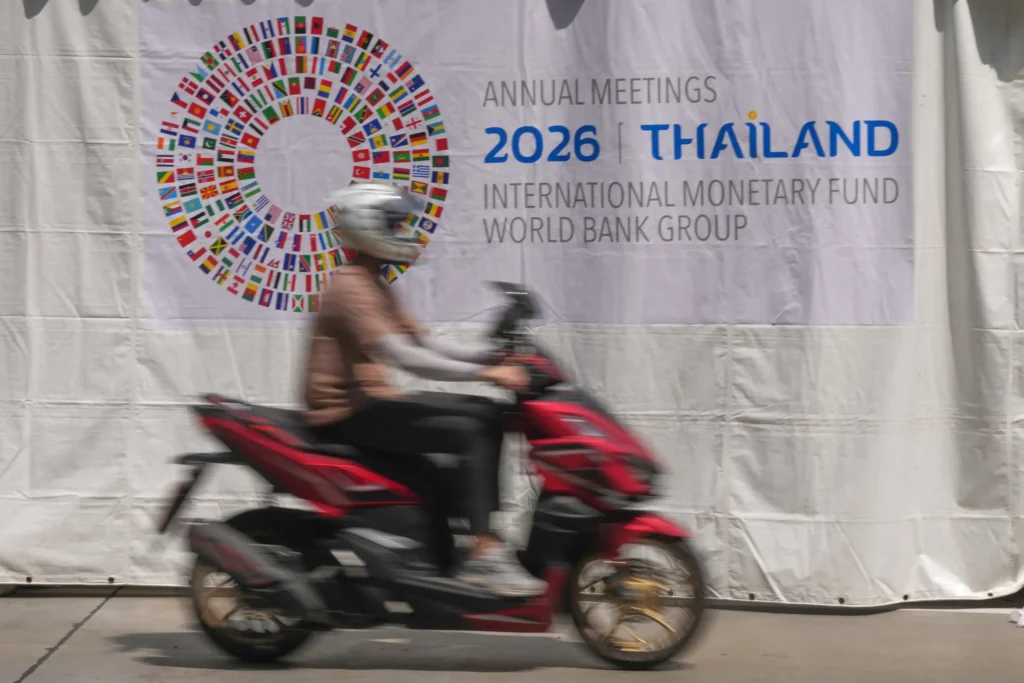
The updated projections, unveiled during the annual autumn gathering of world finance leaders in Bangkok, offer a mixed picture: while resilient tech demand and steady growth in major economies are keeping the global engine running, severe headwinds—ranging from high oil prices to soaring sovereign debt and AI market valuation risks—threaten to unevenly split global economic momentum.
Key Growth Indicators Across Regions
- United States: Projected to hold steady at a resilient 2.3% growth rate across 2026 and 2027.
- Advanced Economies: Expected to average 2.1% growth this year (up from 2.0% in 2025) before easing to 1.9% next year.
- China: Forecasted to grow at 4.5% this year (down from 5.0% in 2025), aligning with official growth targets.
- India: Maintains its position as the world’s fastest-growing major economy at 7.0%, though moderating from last year’s 7.7%.
- Eurozone (21 Nations): Growth remains sluggish at 1.1% this year and 1.2% in 2027.
- Middle East & Central Asia: Hardest hit by recent energy shocks, the region is projected to contract this year before bouncing back to 6.3% in 2027.
An Uneven “K-Shaped” Landscape
The baseline forecasts assume oil prices will average around $96 per barrel following a nearly 41% surge this year, with inflation hovering at 4.7% before cooling to 4.1% next year. However, the benefits of the current economic tide are far from equal.
Growth is becoming strikingly concentrated: just 32 countries now generate 95% of total global growth—a steep consolidation compared to 54 countries earlier this year.
“The global economy isn’t simply accelerating or slowing down as a whole,” noted Silvana Tenreyro, Director of the IMF Research Department. “Growth is being aggressively redistributed based on how heavily each country is impacted by energy supply shocks versus how much they benefit from AI-driven investment.”
For instance, the United States and China combined account for more than three-quarters of net global demand for AI computer chips and advanced hardware. Meanwhile, emerging markets more exposed to high energy costs are expected to see growth slow to 3.7% this year before recovering to 4.4% next year.
The Double-Edged Sword of Artificial Intelligence
While the AI infrastructure boom has helped cushion the broader macro economy against energy supply shocks, policymakers warn it introduces distinct financial and employment risks:
- Market Overheating & Volatility: Rapid AI-driven equity rallies carry correction risks. Concerns flared up as tech stocks across Asian markets saw sharp sell-offs, including a temporary 7% intra-day drop in South Korea’s KOSPI index (closing down 5.5%).
- Disruption in the Labor Force: IMF Managing Director Kristalina Georgieva warned that AI’s impact on global labor is a “slow-moving tsunami.”“We estimate that over time, around 40% of global jobs will be impacted by AI—either enhanced, downgraded, or displaced entirely. And we are already seeing those effects unfold.”
Mounting Debt Pressures
Beyond tech hype, the IMF highlighted rising debt levels and higher borrowing costs as urgent concerns for finance ministers worldwide. With bond yields climbing and government budgets under pressure, officials urge nations to tighten fiscal policies and manage sovereign debt responsibly—particularly as developing economies face high debt-servicing costs amidst global market uncertainty.
What are your thoughts on the IMF’s outlook? Is the AI boom sustainable enough to carry global growth through energy shocks and rising debt? Drop your perspective in the comments below!