Robotaxi operators will face fines if they obstruct the passage of emergency responders.
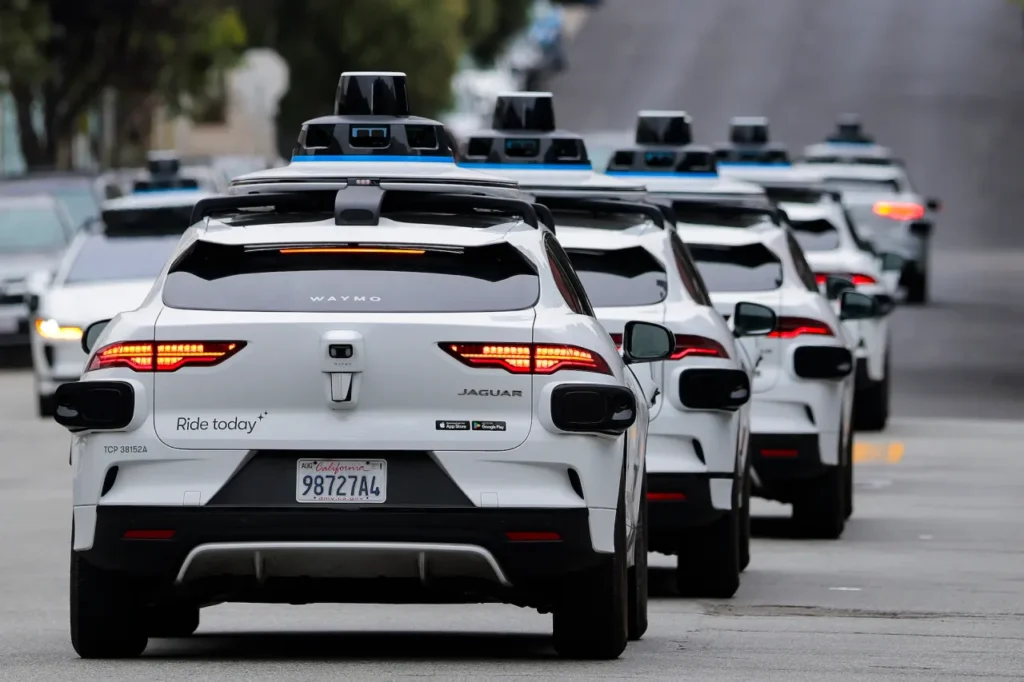
Under a new California law, autonomous vehicle (AV) technology companies such as Tesla, Waymo, and Zoox are required to provide on-site support to emergency responders when addressing issues caused by their driverless taxis. These companies may also face penalties if their driverless taxis obstruct police or firefighters for more than 30 minutes.
Senate Bill 1246, signed into law by California Governor Gavin Newsom, establishes a set of new regulations for autonomous vehicles aimed at improving safety and response times when vehicles malfunction or interfere with emergency personnel. The bill also outlines mechanisms to hold companies accountable should they fail to meet these obligations.
This law stems from a series of high-profile incidents in California where autonomous taxis malfunctioned, disrupted traffic, drove into crime scenes, or obstructed emergency responders.
Many of these incidents involved Waymo, the largest autonomous taxi operator in the U.S., which has a fleet of approximately 4,000 autonomous vehicles nationwide—with about 1,200 located in the San Francisco Bay Area. Earlier this year, a TechCrunch investigation revealed that Waymo relied on emergency responders to manually operate its vehicles during malfunctions in several instances.
These events prompted state and federal lawmakers to call for stricter regulations on autonomous taxis, particularly regarding their behavior around emergency responders. The National Highway Traffic Safety Administration (NHTSA) even sent letters to autonomous vehicle developers, demanding they propose “solutions” to the issue.
California’s new law seeks to address these concerns—at least within the state.
“California has embraced autonomous vehicles, but we cannot welcome innovation at the expense of public safety. There must be clear accountability when autonomous vehicles crash, malfunction, block roads during emergencies, or impede law enforcement or emergency responders,” said State Senator Dave Cortese, the bill’s author.
Under the law, developers of autonomous vehicles may only employ remote drivers residing in the United States who hold U.S. driver’s licenses. This regulation aims to address concerns regarding how companies utilize remote operations in the event of a vehicle malfunction.
The term “remote operation” is interpreted broadly, and little is known about the specific methods employed by autonomous vehicle companies. However, the legal definition of a “remote driver” is more specific, referring to an individual who directly operates or drives the vehicle from a remote location. Tesla is the only company to have publicly stated that it employs personnel capable of directly controlling its robotaxis.
Other companies, including Waymo, state that they utilize remote assistance technology; in this setup, the autonomous system retains control, while staff members provide guidance or issue software commands when necessary. Waymo maintains a global network of remote assistance personnel—including teams in the Philippines—and operates command centers in Arizona and Michigan. According to Zoox, its remote operations team is based in the United States.
The law will also require autonomous vehicle companies to report the location and status of their vehicles to cities, towns, and other local jurisdictions in the event of a system failure, and to provide “local incident technicians” to assist in handling accidents and traffic obstructions involving their vehicles. Companies could also face fines if their autonomous vehicles obstruct emergency responders for more than 30 minutes during an emergency.
Several companies, including Waymo and Zoox, have stated that they will comply with the regulations.
A Waymo spokesperson said in an emailed statement: “We appreciate the amendments made to the bill, which ensure that autonomous vehicle operators can continue to effectively serve California residents. Waymo is committed to enhancing safety on California’s roads and continuously improving our services.”
The law will take effect in July 2028. The California Department of Motor Vehicles, which oversees autonomous vehicles in the state, will establish guidelines for certain aspects of the new law, including required response times.